Lars Braun · 2 September 2026
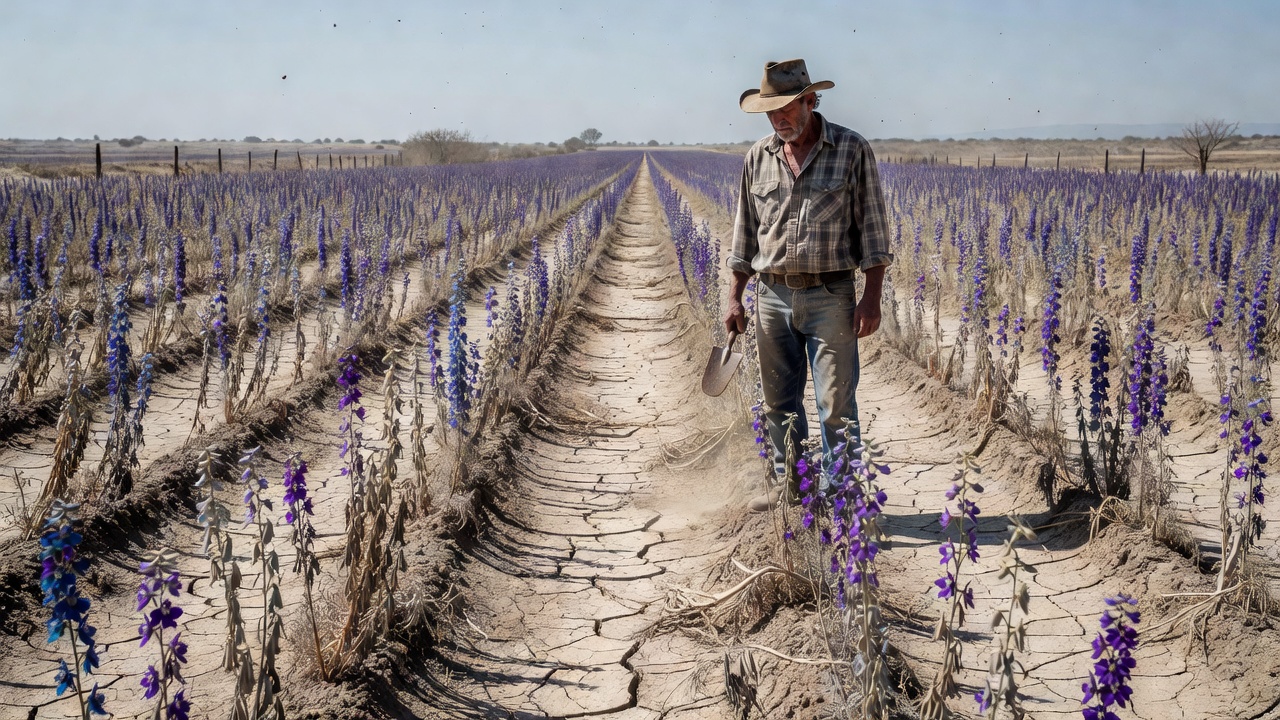
Persistent drought conditions across the Pacific Northwest and California have significantly reduced larkspur yields at commercial nurseries this spring. Growers report production shortfalls of 25 to 40 percent compared with average years, driven by limited water allocations and elevated temperatures during critical growth periods. Larkspur, valued for its tall spikes of blue, purple, and pink blooms, requires consistent moisture from early spring through flowering, making it especially vulnerable to regional water shortages.
Regional Production Shortfalls
Nurseries in Oregon’s Willamette Valley and Washington’s Skagit County have recorded the steepest declines. Many operations curtailed planting acreage by 15 to 30 percent after state water authorities imposed mandatory cutbacks in March. Soil moisture monitoring showed levels 35 percent below normal at transplant time, forcing growers to thin seedlings and delay shipments. In central California, several large-scale producers shifted remaining water resources to higher-value crops, further tightening larkspur supply. Florists and garden centers report wholesale prices rising 18 to 22 percent, with some varieties now back-ordered into early summer.
Seed companies confirm lower germination rates from drought-stressed parent plants, compounding the supply squeeze. Industry analysts note that larkspur’s relatively short harvest window leaves little room for recovery once bloom cycles are disrupted. Smaller independent nurseries without access to deep wells or recycled-water systems have been hit hardest, with several announcing they will skip the fall crop entirely.
Adaptation Measures Underway
Commercial growers are responding with targeted conservation techniques. Drip irrigation retrofits and soil-moisture sensors have reduced water use by up to 25 percent on participating farms. Some operations are trialing drought-tolerant larkspur cultivars developed for Mediterranean climates, although these varieties produce shorter stems less suited to cut-flower markets. Nurseries are also staggering planting dates and using shade cloth to lower evapotranspiration rates during heat spikes.
Extension services recommend mulching and windbreaks to retain soil moisture while advising retailers to communicate realistic availability timelines to customers. Long-term, researchers emphasize breeding programs focused on water-efficient Delphinium lines and improved irrigation scheduling models. Until rainfall patterns normalize, Pacific nurseries expect continued pressure on larkspur volumes and elevated costs for both wholesale buyers and home gardeners.