Zara Frank · 2 September 2026
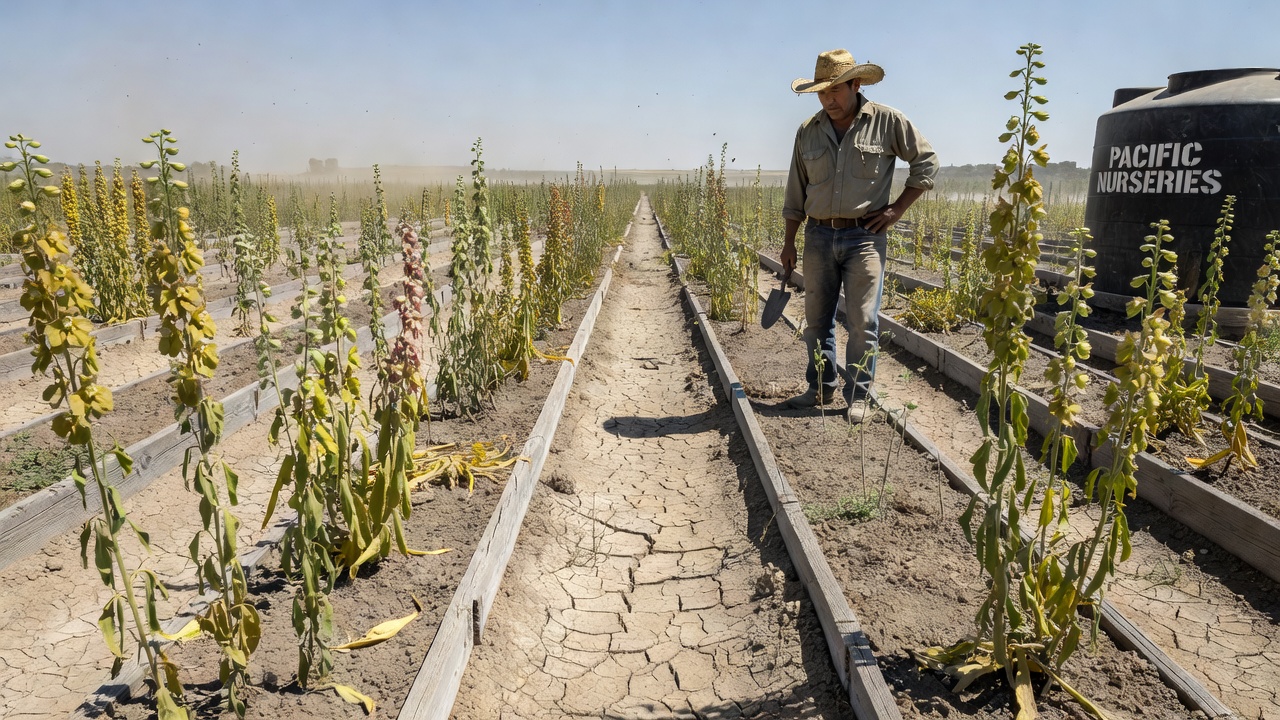
Persistent drought conditions across the Pacific region have significantly reduced larkspur yields in nurseries this spring. Growers in California and Oregon report lower than average production due to water restrictions and dry soil. Larkspur requires consistent moisture during its growing season to develop tall spikes and vibrant blooms in shades of blue, pink and white. Without adequate rainfall many plants have shown stunted growth and reduced flowering. Nurseries typically supply a large portion of the national market for these popular garden annuals but current conditions have forced cutbacks in planting schedules.
Impact on Production Volumes
Nursery managers indicate that yields are down by as much as 30 percent compared to previous years. The dry weather has affected seed germination rates and overall plant health leading to higher rates of crop loss. Irrigation costs have risen sharply putting additional strain on smaller operations that lack advanced water systems. Soil moisture levels remain critically low resulting in weaker stems and fewer marketable stems per acre. Some growers have shifted resources to less water intensive crops further limiting larkspur output this season. Market analysts expect supply shortages to continue through early summer affecting both wholesale and retail channels.
Industry Adaptations and Outlook
In response several nurseries are implementing water conservation techniques such as drip irrigation mulching and soil amendments to improve retention. Research into drought resistant larkspur varieties is underway at regional agricultural centers. Prices for available stock may increase due to reduced supply prompting gardeners to purchase early or explore alternative perennials suited to drier climates. The situation highlights broader challenges facing ornamental horticulture in the Pacific states where climate variability is reshaping traditional growing practices. Continued focus on efficient resource management will be essential for maintaining future production levels of larkspur and similar flowers.